
Sake and Supply Chains
With Palate Project, Genki Ito Moves Beyond Tippsy to Direct Importation
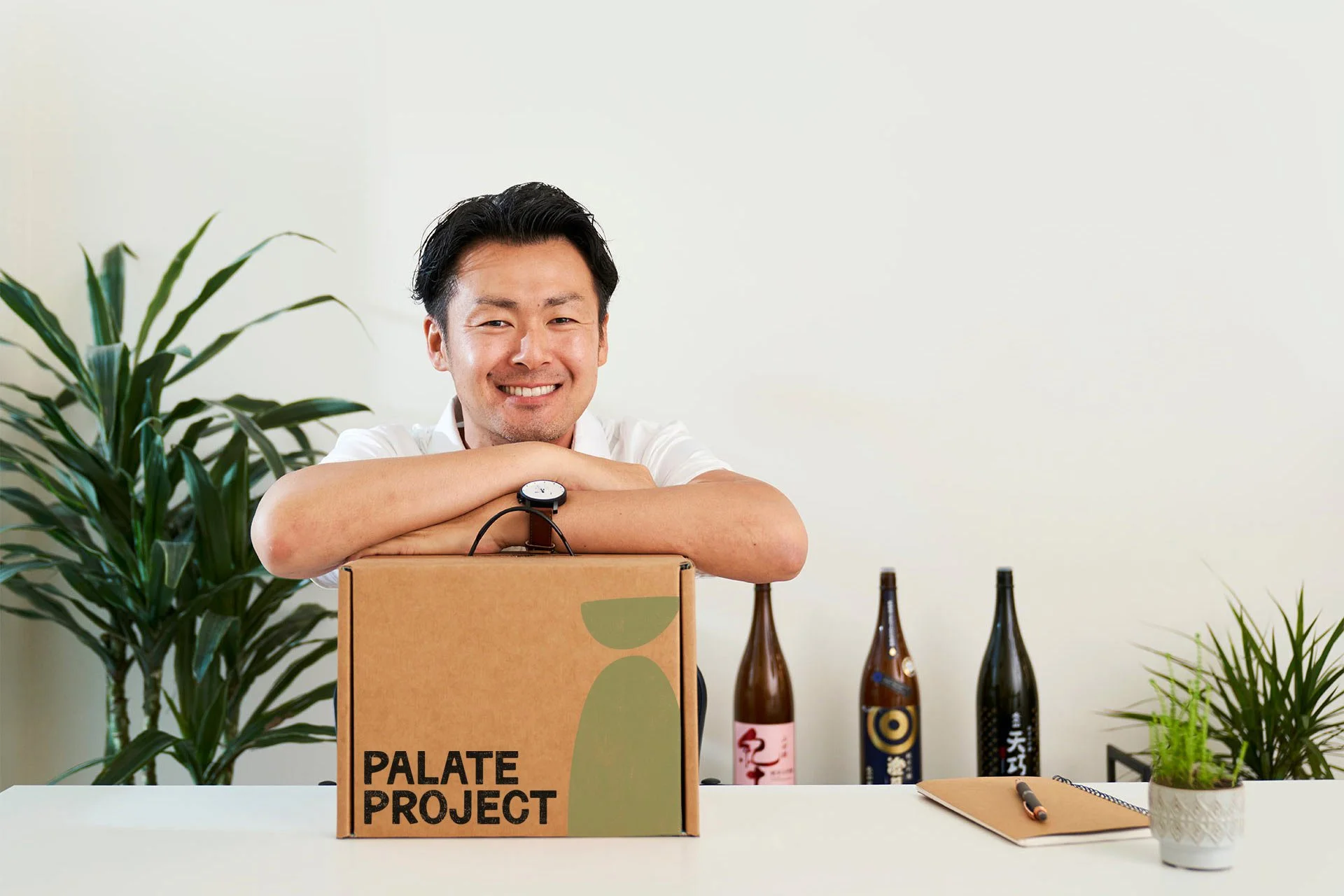
Genki Ito, founder and CEO of Palate Project. All photos courtesy of Palate Project.
Hello RWE Notes on Sake followers!
I’m sharing this article from my Substack publication, “Reaping,” which is now occupying most of my personal content creation time. It’s a continuation of the stories I tell in my latest book Reaping What She Sows: How Women Are Rebuilding Our Broken Food System. But sake remains one of my favorite topics, so I’ll continue to share sake content on both sites; please stay tuned!
Hello Readers!
Recently over sake with friends at Ototo in Los Angeles, Genki Ito, founder and CEO of one of America’s largest sake retailers, Tippsy, told me about a re-brand of the business he had the works—one that would allow him to bring in fresher, higher quality sake to the U.S. and charge less for it.
This was exciting news to me for many reasons. First, obviously, because who doesn’t want better quality namas (unpasteurized sake) at prices closer to those you would pay in Japan? But the most nerdy and self-serving reason was that the way Genki plans to do this is by making the craft sake supply chain shorter, more direct, and more transparent, a topic close to the heart of “Reaping.” We care deeply about questions like, “How do we disrupt the dominant supply chain to get unique products of merit from small producers to consumers?” Often this involves creating alternative supply chains.
So I’m pleased to tell you that today’s post is one in which two of my books—Reaping What She Sows: How Women Are Rebuilding Our Broken Food System, and Exploring the World of Japanese Craft Sake: Rice, Water, Earth—collide.
When Tippsy introduced the soft launch of Palate Project exactly a week ago, the company entered the second stage of its mission to make more sake available to the American public. For the past seven years, Genki and his team have built Tippsy’s impressive 500-plus label product line. (Enter the wayback machine to read my post about its founding here.) They’ve also invested a lot of time and web pages in educating consumers about the basic categories and styles of sake, introducing breweries, and offering lots of tasting guidance.
Now, Genki is turning his attention to overcoming key barriers to growing the sake market: the power imbalance between large distributors and small breweries; the complexity of U.S. alcohol regulations; and the multi-layer supply chain that has resulted. These factors drive up prices for consumers, result in long lead times and suboptimal shipping and storage conditions. Sake that arrives in a compromised state, or that spends a year on an unrefrigerated shelf negatively colors consumers’ perception of sake as a category.
Genki’s solution to these problems is to become an importer and bypass those barriers. He’s teamed up with the third largest food and beverage distributor in Japan, Kokubu, to grow sake into the much larger category he believes it has the potential to be. By bringing in fresher nama sake and carefully documenting its end-to-end cold storage he will test his belief that “great taste transcends culture.”
Allying with Kokubu—which has been in business for more than three hundred-years, is still family owned, and believes in long-term strategic thinking rather than the typical short-term profit-driven cycles—matches Genki’s goal of building relationships and streamlining the supply chain. “They look at the supply chain from rice field to restaurant and retail,” he says.
Palate Project will launch with 60 to 70 labels selected from Kokubu’s 700 or so small- and medium-size breweries, working directly with them instead of the many middlemen who now complicate the supply chain. The project’s Sanchoku (fresh from the brewery) releases are packed in ice and shipped from the brewery via refrigerated container. Here’s how the first release was documented: consumers can see their bottle from end of tank fermentation to bottling, labeling, and entry into the cold storage supply chain.
Drilling Down: How Sake is Distributed Now
The current sake landscape is dominated by three large players, Mutual Trading, JFC, and Wismettac (where Genki worked for 10 years marketing sake), which distribute Japanese food, drink, and restaurant supplies. Yet because liquor import laws vary from state to state, there are only nine states to which they can directly import sake. To sell to the others they must work with a network of liquor and wine sub-distributors. Sub-distributors are generally not very interested in selling sake, or educating buyers about the nuances of the drink. And not only do all these middlemen add layers of cost to the sake, the large distributors offset the very thin margins they take on competitively priced commodity products such as rice and fish by taking very high margins on categories such as processed foods or sake. The result: sake priced as much as 300 to 500 percent above what it costs in Japan.
When Tippsy launched in 2018, there was a dearth of quality retail outlets for sake. The company had to navigate the fragmented and complex distribution networks, buying from the large distributors and their sub-distributors. With the help of a third-party logistics company Tippsy became the sake equivalent of wine.com, offering a wide selection of sake to most U.S. states. Through its extensive consumer education and sales of more than half a million bottles of sake, Genki has helped build a more educated sake drinking public.
Now, he says, “We don’t just want to be a retailer anymore. We want to be the supply chain. Not necessarily disrupting it, but streamlining it for our customers.” Doing this will enable Palate Project to sell a junmai daiginjo that formerly sold for 45 dollars for 26 or 27 dollars,
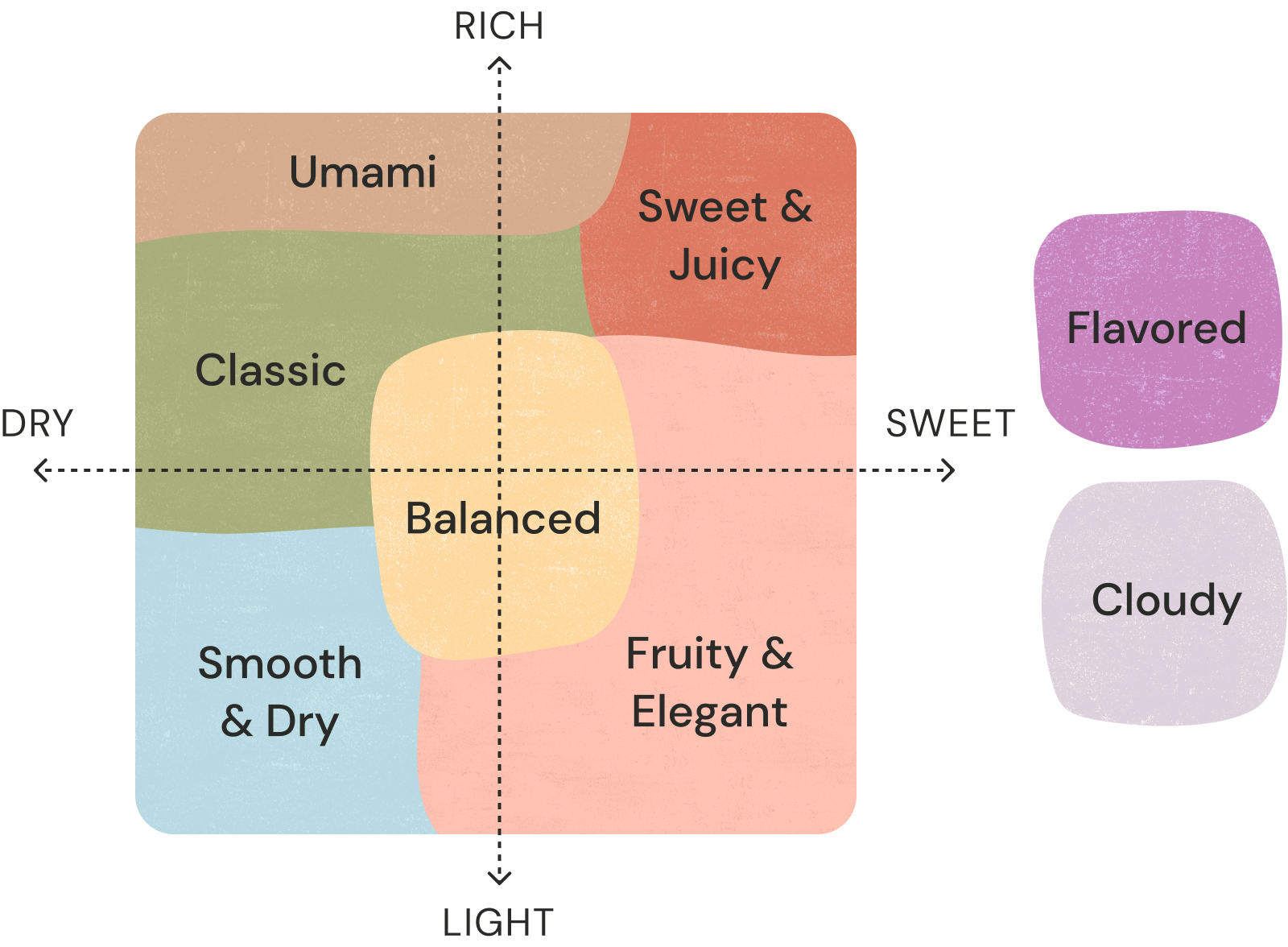
Palate Project’s simplified tasting chart, courtesy of Palate Project.
Sake Taste Profile Descriptors for a Post-Classification World
His seven years of selling sake to Americans has also led Genki to rethink the ways that the company categorizes and describes sake to consumers. This too, he wants to simplify to lower the barrier to sake enjoyment.
Most customers, he learned, are not able to articulate the type of sake they like, or understand descriptors such as “fruity” when applied to a bottle of sake. Showing the sake meter value or acidity level of a bottle is too technical. A taste education has to take place, but employing easy-to-understand terms and visuals. An added reason for coming up with a better way of communicating a sake’s taste and aroma profile is that the current tokutei meisho shu system of classifying sakes by milling ratio (gingo, junmai ginjo, tokubestu ginjo, daiginjo, etc.) is an outmoded system on its way out. We need a new way of delivering information that will allow the consumer to zero in on the type of sake they’re going to be happy with.
Working with a team of professional sake tasters in Japan, Palate Project came up with this simplified tasting chart that buyers can consult to guide their choices. It will be interesting to check in with Palate Project in a few years to see which direction American sake tastes are skewing!
Genki is not averse to one day thinking about exporting American sake to Japan, either. He saw the long line of eager Japanese sake fans waiting to taste Brooklyn Kura imports recently at the Wakate no Yoake 2025 (“Dawn of Young Brewers”) festival in Tokyo. There’s another sake market to keep an eye on as worldwide sake culture evolves.